Best Shipping Container Sizes for Global Buyers Guide?
When exploring global logistics, understanding shipping container sizes is crucial. Experts emphasize the need for precise knowledge in this field. John Smith, a renowned logistician, states, "Choosing the right shipping container sizes can significantly impact shipping efficiency." This insight highlights the importance of selecting appropriate dimensions for diverse cargo needs.
Different industries require varying container sizes to optimize storage and transport. A standard 20-foot container can hold approximately 28 cubic meters, while a 40-foot container offers double that space. Relying solely on standard sizes may not address unique business requirements. Companies often face challenges in picking suitable dimensions for their products.
Furthermore, the market landscape is constantly evolving. New trends in shipping demand innovation and adaptability. While established sizes are helpful, emerging businesses must stay vigilant and flexible. Adjusting container choices can lead to better cost management and improved operational efficiency. Consider how industry shifts may alter future shipping container sizes and their utilization.

Overview of Shipping Container Sizes and Their Importance
When considering shipping containers, size matters significantly. Each container type serves different needs. For example, a standard 20-foot container is often ideal for smaller shipments. Its compact size fits easily into tight spaces and reduces transport costs. Conversely, a 40-foot container is suitable for bulk shipments. It offers substantial capacity, but handling can be more complex.
Choosing the wrong size can lead to complications. Overloading a small container can result in damage during transit. Underusing a larger one may waste resources and increase shipping costs. It is essential to evaluate your cargo size, weight, and nature. This decision impacts logistics and overall efficiency.
Understanding these nuances is crucial for international buyers. Each container’s dimensions and capabilities affect shipping times and expenses. Awareness of these factors can improve supply chain management. Ultimately, the right container choice leads to smoother operations but requires careful reflection on your specific needs.
Common Standard Shipping Container Dimensions and Capacities
When it comes to shipping container sizes, understanding standard dimensions is essential for global buyers. The most common containers are 20-foot and 40-foot long. These can vary in height, typically known as standard and high cube. A standard 20-foot container measures 20 feet long, 8 feet wide, and 8.5 feet high, offering about 1,160 cubic feet of space. The high cube version provides extra height, making it 9.5 feet tall.
Conversely, a 40-foot standard container has 2,390 cubic feet of capacity. The high cube variant allows for even more storage. Buyers may face challenges when selecting the right size. Not every supplier offers the same dimensions, leading to discrepancies. It's wise to confirm measurements to avoid surprises during shipping.
**Tips:** Always measure your cargo before selecting a container size. Factor in weight limits to ensure your items fit safely. It’s helpful to research local regulations on container use, as these can vary significantly. Understanding these dimensions and capacities can enhance your shipping efficiency, yet remain adaptable.
Best Shipping Container Sizes for Global Buyers Guide
| Container Type |
External Dimensions (L x W x H) |
Internal Dimensions (L x W x H) |
Volume (CBM) |
Max Payload (KG) |
| 20 ft Standard |
6058 mm x 2438 mm x 2591 mm |
5910 mm x 2350 mm x 2390 mm |
33.2 |
28000 |
| 40 ft Standard |
12192 mm x 2438 mm x 2591 mm |
12032 mm x 2350 mm x 2390 mm |
67.7 |
22000 |
| 40 ft High Cube |
12192 mm x 2438 mm x 2896 mm |
12032 mm x 2350 mm x 2690 mm |
76.4 |
23000 |
Factors to Consider When Choosing Container Sizes for Shipping
When selecting container sizes for shipping, various factors come into play. Understanding the cargo type is paramount. Different goods require different handling and storage conditions. For instance, perishables need more temperature-controlled solutions. Meanwhile, oversized machinery often demands specific dimensions.
Another essential factor is the shipping route. Some routes have size restrictions or limitations on weight. A standard 20-foot container might suffice for domestic transport. However, international shipping often favors the 40-foot container for efficiency. Additionally, consider the return on investment. Shipping larger containers can lower the cost per unit but may also lead to unused space.
Gauge the frequency of shipments as well. Regular shipments might benefit from a consistent container size, providing reliability. Irregular shipments could necessitate a flexible approach to size. Always reflect on your current choices. Regular reviews can prevent costly mistakes and ensure that your shipping strategy remains aligned with your business needs.
Comparative Analysis of Container Sizes for Different Cargo Types
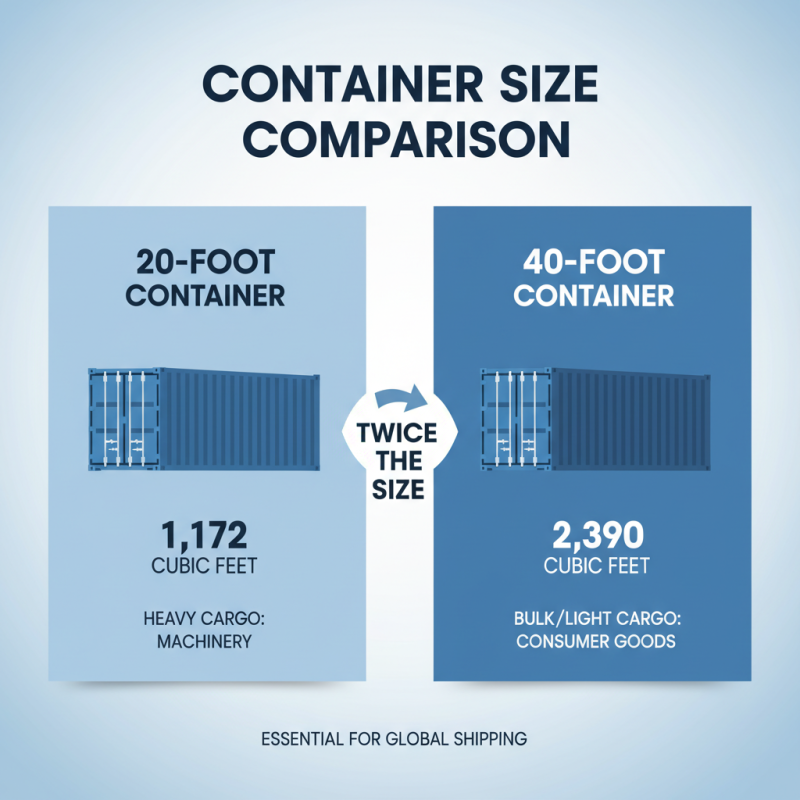
When navigating the world of shipping containers, understanding the sizes available is essential for global buyers. A comparative analysis reveals that the most common container sizes are the 20-foot and 40-foot containers. The 20-foot container can hold about 1,172 cubic feet, making it suitable for shipments of heavy cargo like machinery. Meanwhile, the 40-foot container, offering about 2,390 cubic feet, is ideal for bulk goods or lightweight items.
Reports indicate that around 90% of global trade relies on container shipping. Yet, the choice of container size can affect costs significantly. For example, shipping a partially filled container may not be cost-effective, pushing buyers to consider using smaller containers to minimize waste. Not all cargo types fit neatly into a standardized size, and some items may require specialized containers, such as reefer containers for perishable goods.
Tips: Always calculate the volume and weight of your cargo before choosing a container. This can prevent unnecessary costs. Additionally, consider the port and route; some ports may only accommodate certain container sizes or types. Lastly, consult industry reports for updates and trends; they can provide insights on the most economical choices.
Tips for Global Buyers on Sourcing the Right Container Sizes
When sourcing shipping containers, it’s crucial to select the right sizes based on your needs. Data from the International Maritime Organization indicates that the most common container sizes are 20-foot and 40-foot units. These account for around 90% of global container shipments. Buyers should evaluate their cargo volume to optimize costs effectively.
Consider the dimensions and weight capacity of each container type. A 20-foot container typically holds 33 cubic meters, while a 40-foot container can accommodate up to 67 cubic meters. Understanding these metrics allows you to make informed decisions. It's essential to ensure that your cargo fits efficiently to avoid wasting space and incurring additional fees.
However, sourcing the right container can be challenging. Not all suppliers maintain consistent quality or adhere to safety standards. Issues may arise, such as hidden damages or rust. This makes it necessary for buyers to conduct thorough inspections before purchase. Exploring suppliers who provide comprehensive documentation will enhance reliability in your sourcing process. A dedicated approach will help ensure you choose the right container size that meets your logistical needs.
Best Shipping Container Sizes for Global Buyers