2026 Best Shipping Container Sizes for Your Next Project?
Choosing the right shipping container sizes is crucial for project success. In 2026, the demand for diverse container sizes will continue to grow. According to an industry report by Container Insights, 70% of shipping projects fail due to poor size selection. Expert Johnathan Davis, a leading authority in logistics, states, "Understanding shipping container sizes is essential for maximizing efficiency."
Shipping containers come in various dimensions. The standard sizes are 20 ft and 40 ft, but specialty sizes are gaining popularity. For instance, 10 ft and high cube containers are increasingly utilized for unique projects. These options allow for greater flexibility, but miscalculations can lead to wasted resources and delays.
Even with advancements, many still overlook the significance of correct sizing. One mistake can derail entire projects. Taking the time to assess needs and selecting appropriate shipping container sizes could prevent these issues. Awareness and knowledge are key in navigating the complexities of container logistics.

Overview of Shipping Container Sizes and Their Uses
Shipping containers come in various sizes, each serving different purposes. The most common dimensions are 20-foot and 40-foot containers. The 20-foot container is ideal for small projects. It is compact and easily manageable. A 40-foot container offers more space, suitable for larger needs like storage or office spaces.
When choosing a container size, consider your project's specifics. A small business might require only a 20-foot container for inventory. Conversely, an event organizer may opt for a larger size to create a pop-up space. Understanding the intended use helps in selecting the right size.
**Tips:** Always measure your site before making a decision. Unexpected obstacles can arise. Think about accessibility too; larger containers may be difficult to maneuver in tight locations. Also, don’t rush the selection process. A hasty choice may lead to inefficiencies down the line.
Popular Shipping Container Types for Various Projects
When selecting a shipping container for your project, consider what you'll need. There are various types available, each suitable for different purposes. For storage or temporary offices, the standard 20-foot and 40-foot containers are popular. These containers provide ample space and are easy to transport.
Some projects require specialized containers. For instance, a high cube container offers extra vertical space, making it ideal for taller items. If your project involves food, a refrigerated container ensures perishables stay fresh. Also, consider the condition of the container. A rusted or damaged container may be cheaper, but it can lead to issues later.
**Tips:** Inspect the container before buying. Look for dents or leaks. A single tiny hole can create a bigger problem in the future. Think about insulation if you plan to house anything sensitive to temperature. Another point to keep in mind is local regulations. Always research whether you need permits for placing a container on your property.
2026 Shipping Container Sizes for Various Projects
Key Considerations When Choosing Container Sizes
When considering shipping container sizes for your next project, several key factors come into play. Assessing the space you need is crucial. Are you using the container for storage, living space, or perhaps a pop-up shop? Each purpose demands different dimensions. A standard 20-foot container offers basic storage, while a 40-foot container can be transformed into a cozy retreat.
Access is another vital consideration. Can you place the container where you want it? Will it fit through gates or tight spaces? Not all containers have the same door openings. Ideally, measure twice before making decisions. If you're creative, combining containers can yield multidimensional spaces. However, this comes with its own challenges, like ensuring structural integrity.
Finally, think about transportation logistics. Larger containers may require specialized equipment for delivery. Costs can spiral if you're not careful. It's easy to overlook these details in a rush. Taking time to analyze your project's needs can save you from headaches later on. Adjustments may be necessary, and that's okay. Embrace the learning curve and adapt as required.
Comparative Analysis of Container Dimensions and Capacities
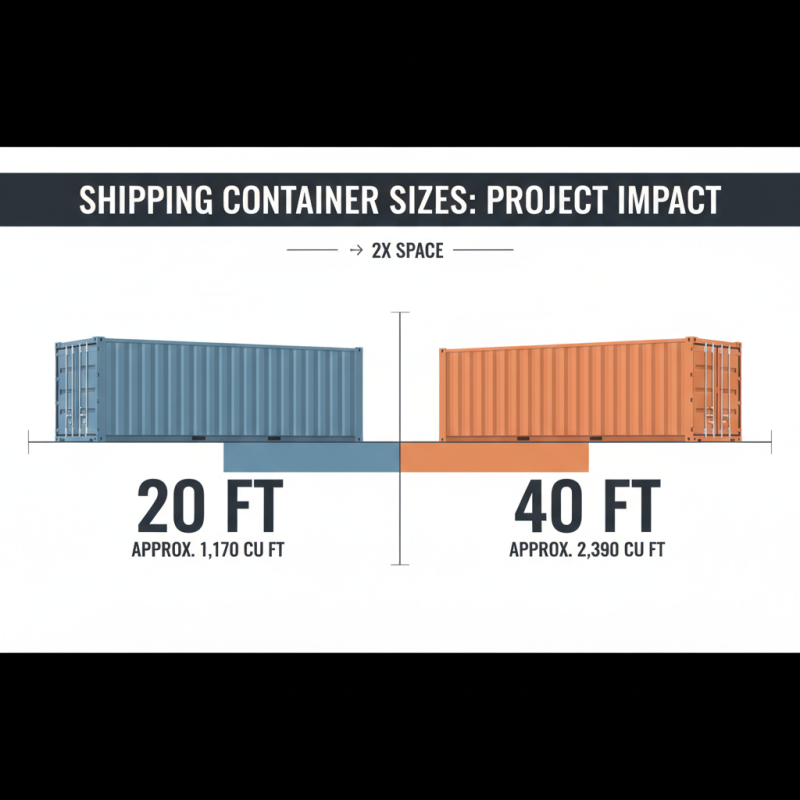
When considering shipping containers for your project, size matters significantly. Various dimensions cater to diverse needs. Standard containers come in 20-foot and 40-foot lengths. The 20-foot container typically offers about 1,170 cubic feet of space, while the 40-foot container provides roughly 2,390 cubic feet. This substantial difference impacts storage capacity and project planning.
Analyzing dimensions and weights reveals insightful metrics. A 20-foot container usually weighs around 5,000 pounds when empty. In contrast, its 40-foot counterpart tips the scales at about 8,000 pounds. Such weight differences can affect transportation logistics. A project demanding mobility may benefit from the lighter 20-foot option, despite its smaller capacity.
However, not all sizes are optimal for every situation. Larger containers hold more items but can be cumbersome. They occupy more space and require more unloading labor. On the other hand, smaller containers may lead to wasted space if filled inefficiently. Each choice comes with its trade-offs. It’s crucial to reflect on your project needs and logistics carefully.
Future Trends in Shipping Container Sizing and Usage
Shipping containers have evolved significantly. Their sizes vary widely, allowing flexible usage. In recent years, we've seen a trend toward smaller containers. This shift is driven by urbanization. Cities need space-efficient solutions. Smaller containers fit better in crowded areas. They are versatile and can serve multiple purposes.
Adapting to future needs means rethinking container sizes. Larger containers may decrease in popularity. Instead, innovative designs are emerging. Modular units that combine several smaller containers are gaining traction. These can be customized for specific projects. They promote sustainability but also pose challenges. Balancing functionality and architectural aesthetics is necessary.
As shipping containers become more prevalent, their usage will expand. We may see containers used in new ways. For instance, repurposing for housing will likely increase. However, with these emerging trends come problems. Ensuring safety and regulations is paramount. It remains essential to keep evolving while addressing these complexities. The journey from shipping to sustainable living is just beginning.
2026 Best Shipping Container Sizes for Your Next Project
| Container Size |
Dimensions (L x W x H) |
Volume (CBM) |
Common Uses |
Future Trends |
| 20ft Standard |
20' x 8' x 8.5' |
33.2 |
Shipping, Storage |
Increased demand for modifications |
| 40ft High Cube |
40' x 8' x 9.5' |
76.4 |
Furniture, Household Goods |
Growing use in residential projects |
| 10ft Standard |
10' x 8' x 8.5' |
15.5 |
Portable Offices, Tool Storage |
Utilization in small scale urban projects |
| 40ft Standard |
40' x 8' x 8.5' |
67.7 |
Bulk Goods, Construction Materials |
Sustainable building practices integration |
| 45ft High Cube |
45' x 8' x 9.5' |
85.0 |
Cargo Transport, Retail |
Adaptation for e-commerce logistics |