China Top 10 Converted Shipping Container Manufacturers

China’s converted shipping containers industry is moving beyond basic storage boxes. Manufacturers now deliver modular offices, retail units, accommodation, classrooms, and engineered site facilities. Their work combines steel fabrication, thermal insulation, electrical systems, plumbing, fire protection, and transport planning.

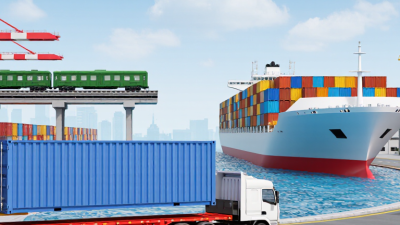
The scale of container logistics explains this opportunity. UNCTAD’s Review of Maritime Transport 2024 reported approximately 858 million twenty-foot equivalent units handled by container ports worldwide in 2023. Grand View Research also identifies expanding demand for modular and prefabricated construction. However, reliable conversion figures remain limited. The market is not perfectly measured.

Architect Adam Kalkin, widely known for container architecture, described the material clearly: “The container is a very good building block. It’s inexpensive, it’s strong, and it’s ubiquitous.” That strength does not guarantee a successful building. Rust treatment, roof loading, condensation control, and safe electrical installation still require careful verification.

This guide examines China’s top 10 converted shipping containers manufacturers through practical criteria. These include manufacturing experience, design capability, material quality, customization, factory inspection, compliance documentation, and after-sales support. Product photographs can mislead. A clean finish is not enough.

Buyers should request drawings, steel specifications, insulation details, wiring diagrams, and inspection records before placing an order. ISO container dimensions may support international transport, but local building requirements still differ. The strongest manufacturers communicate these limits clearly.

There is no flawless ranking. Site conditions, climate, budget, and intended use can change the final choice. This comparison aims to make that decision more evidence-based, not simply more impressive.
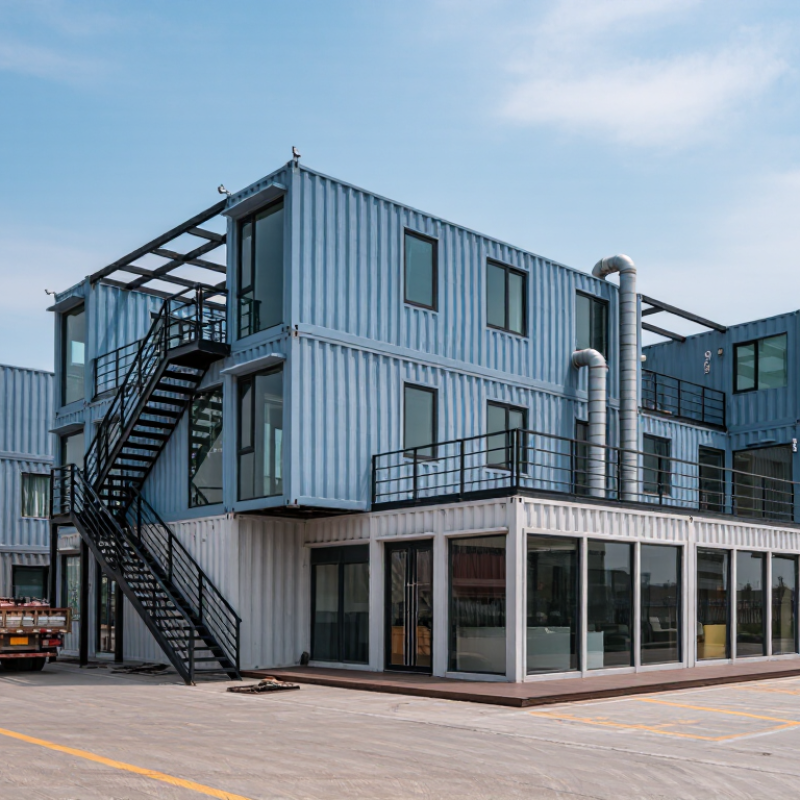
China Top 10 Converted Shipping Container Manufacturers

Scope and Definition of Converted Shipping Containers in China

Converted shipping containers are freight containers redesigned for stationary use after their original transport service. In China, this scope includes modular offices, site cabins, storage rooms, classrooms, clinics, and retail units. It may also include welded frames, insulation, windows, electrical systems, plumbing, and interior finishes. The container remains the structural base.

The boundary is not perfectly clean. Some projects use new containers, while others use inspected used units. ISO 668 defines standard container dimensions and identification requirements. The 1972 CSC Convention addresses safety approval for containers used in international transport. After conversion, buyers should verify whether the unit still carries transport certification or has become a building module. This distinction affects inspection, lifting, shipping, and installation procedures.

Market context matters. UNCTAD’s Review of Maritime Transport 2024 reported global maritime trade of about 12.3 billion tonnes in 2023. That large freight system supplies China’s conversion industry with abundant steel container shells. However, shell availability does not prove conversion quality. Manufacturers should document steel condition, corrosion treatment, load paths, fire performance, insulation thickness, and electrical testing. A practical inspection should check floor moisture, roof seams, door alignment, weld continuity, and drainage outlets. Some catalogues still describe heavily modified units as ordinary containers. That wording can confuse purchasers. Chinese manufacturers should therefore define dimensions, materials, intended use, transport status, and installation limits in each technical quotation.

Criteria for Ranking China’s Leading Container Conversion Manufacturers

China Top 10 Converted Shipping Container Manufacturers

A credible ranking begins with verified conversion experience, not attractive website images. We assess completed projects, factory capacity, and the technical range of each manufacturer. Site visits can reveal welding quality, cutting accuracy, insulation installation, and workshop safety. These details often matter more than marketing language.

Engineering competence receives strong weight. Leading manufacturers should provide structural calculations, material specifications, electrical layouts, and practical fire-safety solutions. We examine steel grades, corrosion protection, roof drainage, ventilation, and thermal performance. Quality control records should cover incoming materials, weld inspections, dimensional checks, and final testing. Clear documentation shows professional discipline.

Reliability also depends on communication and delivery performance. We review sample approvals, production schedules, packaging methods, and responses to design changes. After-sales support matters, especially when units require replacement parts or installation guidance. Independent certifications and traceable project references strengthen authority, but certificates alone cannot prove consistent workmanship. A manufacturer may meet a standard on paper and still produce uneven results. No scoring model is perfect. Some evidence remains difficult to verify across distant factories. For that reason, our ranking balances audited records, technical interviews, customer feedback, and direct observations. Cost is considered, but unusually low pricing may signal thinner materials, rushed labor, or limited testing. The strongest manufacturers explain these trade-offs openly and provide realistic performance expectations.

Criteria for Ranking China’s Leading Container Conversion Manufacturers

Recommended assessment weighting for comparing container conversion manufacturers by production capability, engineering strength, quality control, delivery performance, sustainability, and service support.

The weighting prioritizes measurable manufacturing and project-delivery capabilities while also considering customization, environmental performance, and long-term customer support. No individual company or brand data is included.

Profiles of China’s Top 10 Converted Shipping Container Manufacturers

China’s top ten converted shipping container manufacturers serve different project needs. One specializes in modular offices with insulated walls and quiet wiring. Another focuses on compact homes, using steel frames, fire-rated panels, and efficient layouts. A third builds refrigerated units for controlled-temperature storage. Its teams test door seals and interior temperatures before delivery.

A fourth manufacturer produces retail kiosks with reinforced floors and large service windows. A fifth develops portable classrooms, adding safe ventilation and durable flooring. Another supplies site accommodation for construction projects, with practical bathrooms and shared kitchens. One focuses on medical units, where clean surfaces and reliable power matter. A coastal specialist converts containers into workshops and storage rooms. An export-oriented manufacturer emphasizes flat-pack transport and clear installation drawings. The tenth offers custom engineering for uneven sites, though its solutions may cost more. Factory experience is useful, but drawings still need independent review.

Tips: Check weld quality, insulation thickness, drainage, electrical certificates, and corrosion treatment. Request recent project photos and factory inspection records. Confirm delivery access before production begins. A low quotation can hide thinner panels or unfinished details. I would also ask how defects are handled after installation. Some suppliers promise fast delivery, but schedules can shift when customization increases. That weakness deserves honest discussion.

China Top 10 Converted Shipping Container Manufacturers - Profiles of China’s Top 10 Converted Shipping Container Manufacturers
Rank Profile Primary Production Region Typical Converted Products Common Container Sizes Construction and Insulation Standards and Compliance Focus Typical Project Markets Customization Capability
1 Manufacturer Profile 01 Jiangsu and Shanghai corridor Modular offices Site accommodation Retail units 10 ft, 20 ft and 40 ft units; high-cube options available Steel container frames with insulated sandwich-panel walls, roof systems and moisture-resistant flooring ISO container dimensions, structural-load checks, electrical safety and local building requirements Construction sites, logistics parks, temporary offices and commercial facilities High; layouts, doors, windows, electrical systems, plumbing and exterior finishes can be specified
2 Manufacturer Profile 02 Shandong coastal manufacturing belt Worker accommodation Dormitories Guard houses 20 ft and 40 ft standard containers; expandable configurations Galvanized or painted steel structures, rock-wool or polyurethane insulation and anti-corrosion coatings Fire-rating selection, wind-load design, lifting points and regional electrical specifications Infrastructure projects, mining support, industrial compounds and emergency accommodation High; single-unit and multi-unit arrangements with connecting corridors
3 Manufacturer Profile 03 Guangdong Pearl River Delta Container homes Cafés Pop-up stores 20 ft, 40 ft and 40 ft high-cube containers Reinforced steel frames, insulated wall panels, thermal-break windows and weatherproof external cladding Electrical protection, fire-safety provisions, water drainage and coastal corrosion resistance Hospitality, tourism, residential extensions and urban temporary projects Very high; façade systems, glazing, interior themes and modular stacking are commonly offered
4 Manufacturer Profile 04 Zhejiang and Ningbo area Portable classrooms Training rooms Medical units 20 ft and 40 ft units; multi-container floor plans Non-combustible or fire-resistant insulation options, hygienic interior panels and washable floor finishes Fire evacuation planning, accessibility, indoor-air quality and sanitary installation requirements Schools, clinics, public-service projects and disaster-response programs High; partitioning, accessibility adaptations, HVAC and medical-service layouts
5 Manufacturer Profile 05 Fujian coastal industrial zone Residential modules Holiday cabins Back-of-house units 20 ft, 40 ft and high-cube units Marine-grade protective coatings, insulated roof assemblies and moisture-controlled interior systems Wind resistance, corrosion protection, drainage design and local residential-code coordination Resorts, rural accommodation, coastal developments and remote work camps High; balconies, decks, bathrooms, kitchens and off-grid utility packages
6 Manufacturer Profile 06 Hebei and Tianjin region Industrial workshops Storage rooms Equipment enclosures 10 ft, 20 ft and 40 ft containers; reinforced units for heavy equipment Heavy-duty steel bases, anti-impact lining, insulated panels and optional fire-resistant assemblies Load-bearing calculations, ventilation, electrical distribution and workplace-safety provisions Manufacturing, energy, warehousing, transportation and utility infrastructure Medium to high; equipment access, cable routing, ventilation and reinforced openings
7 Manufacturer Profile 07 Hubei and central China Site offices Canteens Welfare facilities 20 ft and 40 ft standard containers Insulated steel-panel systems, durable commercial flooring and integrated ceiling services Food-service hygiene, electrical safety, fire protection and occupational-use requirements Large construction projects, transportation hubs and municipal works Medium; standardized room modules with configurable internal partitions
8 Manufacturer Profile 08 Chongqing and southwest China Mountain accommodation Remote offices Security cabins 10 ft, 20 ft and 40 ft units; transport-friendly compact modules Lightweight steel framing, insulated panels, reinforced lifting points and weather-resistant finishes Seismic design coordination, slope-site transport planning, fire safety and drainage Hydropower, transport infrastructure, tourism and remote industrial sites High; compact layouts, solar-ready systems, water tanks and independent utility packages
9 Manufacturer Profile 09 Anhui and eastern inland manufacturing belt Container classrooms Dormitory blocks Public-service modules 20 ft and 40 ft units; two-storey arrangements subject to engineering review Factory-cut insulated panels, steel connection systems, fire-resistant options and energy-efficient glazing Modular structural review, fire compartmentation, accessibility and electrical compliance Education, social housing, public administration and workforce accommodation High; repeatable room modules support phased expansion and rapid deployment
10 Manufacturer Profile 10 Liaoning and northeast China Cold-climate offices Equipment rooms Seasonal accommodation 20 ft and 40 ft high-cube containers; insulated cold-weather packages Enhanced thermal insulation, sealed joints, heating provisions and anti-freeze plumbing options Snow-load assessment, low-temperature materials, fire protection and heating-system safety Energy, mining, winter construction and cold-region infrastructure Medium to high; thermal upgrades, heating, vestibules and freeze-protection systems

Product Types, Customization Options, and Production Capabilities

China Top 10 Converted Shipping Container Manufacturers

China’s top ten converted shipping container manufacturers typically produce offices, accommodation units, cafés, retail kiosks, classrooms, and sanitary modules. Their product ranges vary widely. Some specialize in single-container rooms, while others combine several units into larger buildings. A reliable manufacturer should explain container grades, floor loading, insulation thickness, and expected service conditions.

Customization often begins with the layout. Buyers can request sliding doors, full-height windows, steel stairs, bathrooms, kitchens, or partition walls. Electrical systems may include LED lighting, distribution boards, sockets, and concealed cabling.

Plumbing, air conditioning, fire-resistant panels, and exterior cladding require careful coordination. Small details matter. A poorly placed drain can disrupt an otherwise practical design.

Production capability is more than a large workshop. Look for computer-aided drawings, controlled cutting, certified welding procedures, surface preparation, and documented inspections. Some factories can complete structural modification, painting, interior fitting, and factory acceptance checks under one roof. Others outsource electrical or plumbing work, which may create coordination gaps.

A clean showroom proves little. Ask for production photos, material specifications, load calculations, and sample inspection records. Even experienced buyers can overlook transport limits, crane access, or local building requirements. The best evaluation remains slightly cautious, because attractive renders cannot reveal every weakness.

Quality Standards, Pricing Factors, and Export Considerations

When reviewing China’s top ten converted shipping container manufacturers, quality starts with traceable steel condition, not attractive photographs. Experienced buyers request container age, repair records, welding procedures, and coating specifications. ISO-aligned systems help, but certificates cannot reveal a poorly sealed corner post. Inspect door gaskets, floor moisture, roof seams, and weld penetration before production approval. A 1 mm gap matters. Factory inspections should include dimensional checks after cutting and reinforcement. Fire ratings, electrical protection, ventilation, and insulation must match destination building requirements. Local engineering review remains essential.

Pricing reflects more than the used container itself. Steel grade, cutting complexity, reinforcement weight, insulation thickness, windows, plumbing, and electrical loads can change quotations sharply. Ask for itemized offers covering drawings, tolerances, testing fees, packaging, inland transport, and port charges. The cheapest quote may omit corrosion treatment or commissioning support. That omission becomes expensive later. Buyers should compare delivered cost, not factory price. Currency changes and freight fluctuations also need a written validity period. I would question any quotation that stays vague about exclusions.

Export readiness depends on documents and repeatable packing. Manufacturers should provide commercial invoices, packing lists, origin certificates, material declarations, and inspection reports when required. Confirm dimensions, gross weight, lifting points, and lashing plans with the carrier. Timber packaging may need treatment marks under importing-country rules. Electrical components can require destination-specific compliance evidence. Samples of sealant and touch-up paint should travel with the unit. Delays often begin with one missing document. Even strong workshops can misjudge foreign inspection practices, so pre-shipment audits and independent surveys remain practical safeguards.