China Top 10 Small Shipping Container Types?
Choosing among China’s top 10 small shipping container types requires more than comparing prices online. Buyers should examine dimensions, steel thickness, door design, ventilation, flooring, and certification. The term small shipping containers covers several practical formats, including 6-foot, 8-foot, 10-foot, and compact 20-foot models. Each serves a different purpose.
A 6-foot container may fit tools beside a workshop wall. An 8-foot model can store garden equipment, spare parts, or seasonal stock. Ten-foot containers offer more usable floor space while remaining easier to position than standard units. Some designs include side-opening doors, double doors, insulated panels, or refrigeration systems. Others use open-top structures for taller cargo. Details matter.
In real purchasing work, measurements often create unexpected problems. A container may fit the planned area, but the delivery truck may not. Ground clearance, crane access, and turning space deserve equal attention. The ranking is not absolute. It depends on cargo, site conditions, budget, and local transport requirements.
Reliable suppliers should provide clear drawings, material specifications, load information, and inspection records. Buyers should also confirm weather resistance, locking systems, paint quality, and replacement-part availability. Compliance documentation must match the intended market and application. A low price can hide thin panels or weak door hardware. That mistake becomes expensive later.
This guide compares ten compact container types made or supplied in China. It focuses on practical usability, construction quality, customization, and value. Some classifications overlap. That is worth acknowledging. Careful comparison remains the safer path.
What Defines a Small Shipping Container in China
China Top 10 Small Shipping Container Types: What Defines a Small Shipping Container in China
In China, a small shipping container usually means a unit shorter than the common 20-foot model. Length alone does not define it. Internal volume, door clearance, payload, and handling equipment also matter. A six-foot container suits tools or compact storage. Eight-foot, ten-foot, twelve-foot, and fifteen-foot models serve workshops, retail stock, and temporary site offices. Other practical choices include half-height, open-top, side-opening, refrigerated, and flat-rack containers.
Dimensions can vary between manufacturers. That detail deserves attention. A listed ten-foot container may have different corner fittings, wall thickness, or internal height. In field inspections, I check the external length first, then measure the door opening and floor area. A container holding 10 cubic meters may still reject a tall machine. Small does not always mean light.
Dimensions can vary between manufacturers.
A listed ten-foot container may have different corner fittings, wall thickness, or internal height.
Material quality also defines usefulness. Weather-resistant steel, sound door seals, treated floors, and certified lifting points support safer transport and longer service. Buyers should request drawings, payload data, weld photographs, and inspection records before ordering. Chinese suppliers may offer customized colors, doors, vents, or insulation, but every modification can reduce usable space.
I once underestimated door swing space on a compact layout. It looked efficient on paper, yet loading became awkward. That mistake is worth remembering when comparing the top ten small container types.
The Ten Main Small Shipping Container Types and Their Uses
China Top 10 Small Shipping Container Types?
Small shipping containers solve space problems in ports, warehouses, farms, and construction sites. The 6-foot standard container suits tools and compact inventory. The 8-foot standard model adds room without demanding much ground space. A 10-foot standard container works well for general cargo, spare parts, and seasonal stock. The 10-foot high-cube version provides extra height for tall cartons or shelving. Space matters. Always check internal dimensions before ordering.
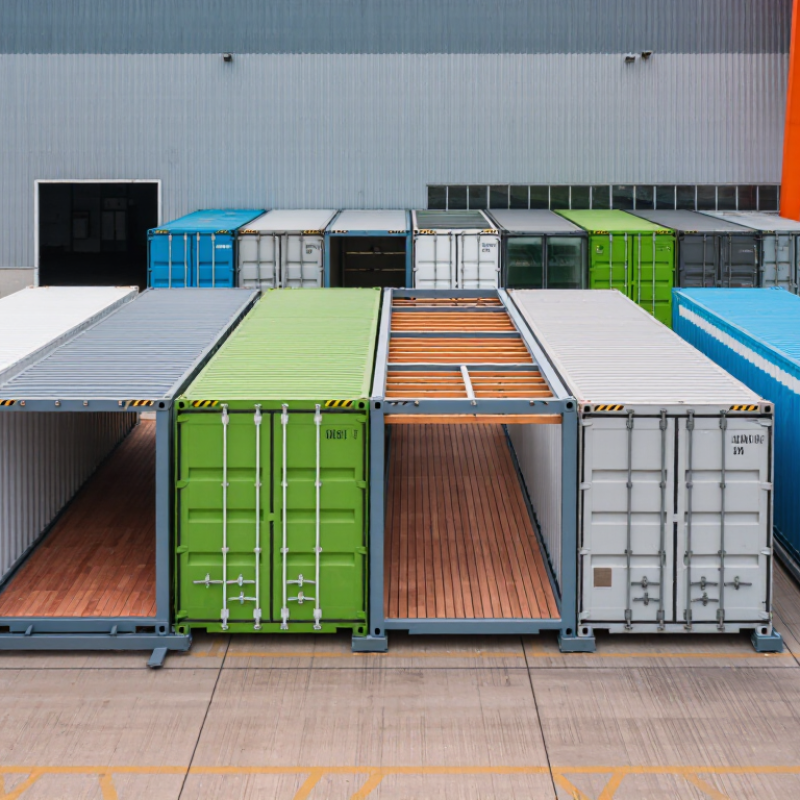
A 10-foot side-opening container allows workers to reach pallets from the long side. This feature helps on narrow sites. The 10-foot open-top container handles tall cargo loaded by crane, although weather protection needs planning.
A 10-foot refrigerated container supports temperature-sensitive food and medical supplies. The 10-foot insulated container offers stable conditions without active cooling. It may suit documents, electronics, or paint kept within permitted storage requirements. Performance varies with insulation quality and outdoor temperature.
A 10-foot flat-rack container carries dense machinery, pipes, or oversized equipment. Proper lashing remains essential. A 10-foot tank container can transport approved food-grade liquids under suitable operating rules. It requires inspection, cleaning, and trained handling.
Field checks often reveal a simple mistake: buyers focus on external length but overlook door width, floor load limits, and delivery access. Measure twice. Small containers save space, but poor ventilation, condensation, and uneven ground can damage contents. Local transport and safety requirements should guide the final selection.
How to Choose the Right Small Shipping Container
Choosing the right small shipping container starts with cargo, route, and handling equipment. The ten practical options include 6ft, 8ft, 10ft, and 20ft standard units, plus half-height, open-top, side-opening, tunnel, insulated, and refrigerated containers. A 6ft container suits samples or compact tools. A 10ft unit offers more floor space without the footprint of a 20ft box. Refrigerated models require stable power and temperature monitoring. Open-top units help load tall machinery, but they need careful weather protection.
UNCTAD’s Review of Maritime Transport 2024 reported that global maritime trade grew by 2.4% in 2023. Rerouting and port congestion still affect schedules and equipment availability. Therefore, check external dimensions, internal volume, door clearance, tare weight, and payload together. ISO 668 dimensions support compatibility, while a valid CSC safety plate matters for international sea transport. A smaller container is not automatically cheaper. Handling fees, inland delivery, and limited loading access can change the calculation. No spreadsheet replaces a trial load.
Tips: Measure the largest package diagonally, not only by length. Leave space for bracing and airflow. Keep the heaviest cargo low and near the center. Ask the supplier for recent photos, floor condition, door seals, and inspection records. If cargo volume changes seasonally, compare a 10ft unit with shared transport. The “perfect” size may not exist; choosing slightly larger can sometimes reduce damage and reloading work.
China’s Manufacturing Standards, Customization, and Shipping Options
China Top 10 Small Shipping Container Types?
China’s small container market includes 6-foot, 8-foot, 10-foot, 12-foot, half-height, open-top, flat-rack, insulated, refrigerated, and side-opening units. ISO 668 sets core external dimensions and container ratings. However, buyers still need factory-level verification. Weld quality, corner-casting alignment, door compression, and floor loading can vary between suppliers.
China’s manufacturing advantage is flexible customization. Factories can adjust ventilation, shelving, lock positions, insulation thickness, and marine-grade coatings. A 10-foot unit may suit a compact site, while a half-height container can carry dense machinery more efficiently. The CSC Safety Convention also matters for applicable freight containers. Ask for inspection records, material certificates, and a measured tare weight. A cheaper quote can still be the wrong decision.
Shipping choices depend on size, destination, and urgency. Small units may move by LCL, FCL, rail, truck, or air freight for selected components. UNCTAD reported approximately 858 million TEUs in global container port throughput in 2023, showing the scale of container logistics. Yet port handling is not equally convenient for every small format. Confirm crane access, stacking limits, inland delivery, and empty-return rules before production. In practice, buyers sometimes overvalue paint color and underestimate door clearance. That mistake is surprisingly expensive.
China Top 10 Small Shipping Container Types
Typical internal volume of compact and commonly shipped container types manufactured in China. Values are based on common ISO-compatible dimensions and widely produced compact variants; exact dimensions vary by CSC-certified construction, insulation, doors, and fittings.
Manufacturing standards
International models commonly follow ISO 668 dimensional rules, ISO 1161 corner fittings, and CSC safety requirements. Compact 6 ft, 8 ft, 10 ft, and 12 ft units are often manufactured as non-standard customized sizes.
Customization options
Typical configurations include high-cube height, side doors, double-end doors, windows, ventilation, shelving, insulation, electrical systems, refrigeration, and corrosion-protection coatings.
Shipping options
Standard ISO units can usually move by container vessel, rail, and truck. Smaller customized units may require flat-rack, breakbulk, or consolidated cargo shipping depending on their dimensions and corner fittings.