How to Choose the Best Peripheral Driving Thickener?
Choosing the right Peripheral Driving Thickener can determine whether a solid-liquid separation system runs smoothly or struggles with unstable overflow. This equipment supports clarification, concentration, and water recovery in mining, aggregates, chemical processing, and wastewater applications. A suitable model must match the feed material, required capacity, underflow density, and site conditions.
In practice, selection begins with the slurry itself. Particle size, settling speed, viscosity, and solids concentration affect the tank diameter and drive torque. Laboratory settling tests can reveal whether flocculants are effective and how quickly clarified water forms. The rake mechanism also deserves close attention. High-torque designs may handle dense mud, while lighter applications may require less mechanical capacity. Small details matter.
Power supply, climate, foundation design, and maintenance access can change the final decision. A thickener installed in a cold, remote site may need different protection than one operating indoors. Operators should inspect drive components, rake arms, feedwell design, and underflow discharge arrangements before purchase. Supplier experience is valuable, but independent technical review remains important.
There is no universal “best” machine. Initial calculations can miss seasonal feed changes, and real slurry behavior may differ from laboratory results. That uncertainty should be acknowledged, not hidden. Reliable selection combines tested data, proven engineering practice, clear performance targets, and honest communication with the manufacturer. This guide explains the main criteria, common mistakes, and practical questions that help buyers choose a Peripheral Driving Thickener with greater confidence.
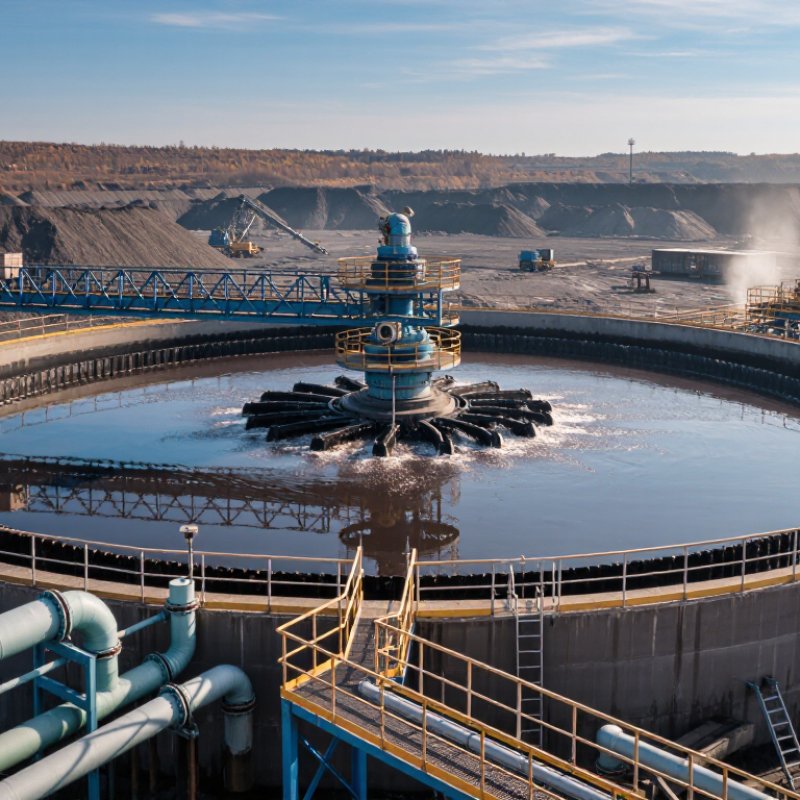
Understanding Peripheral Driving Thickener Design and Function
A peripheral driving thickener uses a circular tank, a rotating rake, and a drive unit mounted near the rim. The drive travels around the tank edge. Its torque turns the central shaft and scraper arms. Feed enters near the center, while settled solids move slowly toward the underflow outlet. Clear liquid rises and leaves through an overflow weir. This layout separates clarification from solids removal within one controlled process.
Choosing one requires more than tank diameter. Confirm feed solids, particle size, temperature, and expected settling rate. Laboratory settling tests can reveal blanket behavior and compaction limits. Rake torque matters because overloaded beds can damage the drive. Check bridge stiffness, rake-lift protection, corrosion resistance, and access for inspection.
A variable-speed drive may help during changing feed conditions. But excessive speed can disturb the blanket and reduce overflow clarity. Small details matter.
During operation, monitor torque trends, bed depth, overflow turbidity, and underflow density together. One reading can mislead. A rising torque value may indicate a dense bed, poor withdrawal, or an inaccurate sensor. Compare instruments with visual checks and regular sampling. Practical operation often shows that design calculations miss seasonal changes. A clean calculation is not enough. Leave room for adjustment. Request load calculations, testing records, maintenance intervals, and clear performance limits before selecting the equipment.
Identifying the Key Performance Requirements for Your Application
How to Choose the Best Peripheral Driving Thickener?
Selecting a peripheral driving thickener starts with your actual process demands, not equipment size alone. Measure average and peak feed flow, solids concentration, particle size, and settling behavior. These values determine tank diameter, drive torque, and rake loading. A unit handling variable ore or wastewater feed needs a wider operating margin. Otherwise, a short overload may cause torque alarms, poor underflow discharge, or mechanical stress.
Clarified overflow quality is equally important. Check the required suspended solids level and observe how seasonal temperature changes affect settling. Underflow density also matters. A thick underflow can reduce pumping costs, but excessive density may increase rake resistance. During site evaluations, operators often focus on capacity and overlook maintenance access. Leave practical space for inspection, scraping, lubrication, and safe removal of wear parts. Small details matter.
Tips: Request settling tests using representative samples, including difficult feed conditions. Review torque trends, rake lift protection, control response, and emergency shutdown functions. Ask for verified operating data, not only theoretical capacity. Consider corrosion, wash-water availability, local climate, and operator skill. A conservative design is usually safer, yet excessive safety margins can raise capital costs without improving performance. This balance deserves careful review. Real feed conditions are rarely perfect.
Comparing Thickening Capacity, Torque, and Operating Efficiency
How to Choose the Best Peripheral Driving Thickener?
Comparing thickening capacity, torque, and operating efficiency requires process evidence, not brochure figures. In field evaluations, I compare feed solids, overflow clarity, underflow density, and rake torque at stable flow. Capacity is often reported in tonnes per hour. However, it depends on settling behavior, bed depth, and feed distribution. A thickener handling 25 tonnes daily may struggle when flocculation changes. Small samples can mislead. Test realistic sludge.
Torque indicates how the rake mechanism responds to the solids bed. Rising torque may signal excessive bed depth, poor dilution, or uneven feed. I prefer reviewing continuous torque trends rather than one maximum reading. A short overload test is useful, but it cannot represent months of operation. That assumption can fail. Check the drive’s control response, alarm settings, and emergency lifting arrangement before selection.
Operating efficiency includes more than motor power. Compare rake-drive energy, pumping demand, polymer use, and cleaning time under the same loading conditions. A slightly larger unit may reduce torque peaks and unplanned stoppages. Conversely, oversized equipment can waste energy and occupy unnecessary space. Measure it directly. Track underflow concentration across changing feed rates, because stable density often matters more than a strong result from one shift. My own comparisons have sometimes favored the less powerful drive, although maintenance access later proved more important than expected.
Selecting Features, Materials, Maintenance Needs, and Supplier Support
A peripheral driving thickener should be chosen around the ore, not only its advertised capacity. In commissioning work, operators often focus on diameter and overlook torque demand. That mistake becomes visible when a dense bed slows the rake mechanism. Specify feed solids, settling rate, underflow density, and seasonal temperature changes. A reliable design includes torque monitoring, overload protection, accessible walkways, and a stable feedwell. Keep controls simple.
Material selection must match both abrasion and process chemistry. Carbon steel may suit the tank shell, while stainless steel can protect wetted components in corrosive service. Abrasion-resistant liners are useful near the feedwell and underflow zone. Coatings also matter, but a coating that looks excellent during installation may fail after repeated cleaning. Check coating thickness, surface preparation, and repair procedures. Small details often decide service life.
Maintenance needs should be visible before purchase. Request inspection points for the drive, rake arms, bearings, and torque limiter. Ask how operators can remove sludge without entering restricted areas. The supplier should provide drawings, load calculations, manuals, spare-parts lists, and practical training. References from sites processing similar ore are more valuable than general testimonials. Confirm response times for emergency support and clarify which parts are locally available. Some suppliers promise fast assistance, yet their documentation remains incomplete. Treat that as a warning, not a minor inconvenience.
How to Choose the Best Peripheral Driving Thickener?
Neutral procurement scorecard showing practical selection priorities for features, materials, maintenance, and supplier support.
The 100-point weighting reflects common engineering considerations: solids loading and drive torque affect process capacity, while corrosion-resistant materials, rake and bridge robustness, maintenance access, spare-parts availability, and supplier support influence service life and operating continuity. Adjust the weights for site-specific feed characteristics and regulations.