10 Essential Tips for Choosing the Right 10ft Storage Container for Your Needs
When it comes to selecting a suitable storage solution, a "10ft storage container" often emerges as a versatile choice for both personal and commercial needs. According to recent industry reports, the demand for container storage solutions has surged by over 25% in the past few years, reflecting a growing trend in urbanization and space optimization. This type of storage unit offers an ideal balance of convenience and capacity, catering to diverse requirements ranging from temporary storage during relocations to secure storage for business inventory.
Choosing the right 10ft storage container involves careful consideration of several factors, including the container's condition, suitability for specific goods, and location accessibility. Insight from the Portable Storage Association highlights that over 60% of users report that unit size and durability significantly impact their satisfaction with storage solutions. Therefore, understanding the essential characteristics of a 10ft storage container is key to maximizing its utility while ensuring safety and efficiency in storage operations. By following these guidelines, users can make informed decisions that align with their needs and ultimately enhance their storage experience.
Key Factors to Consider When Selecting a 10ft Storage Container
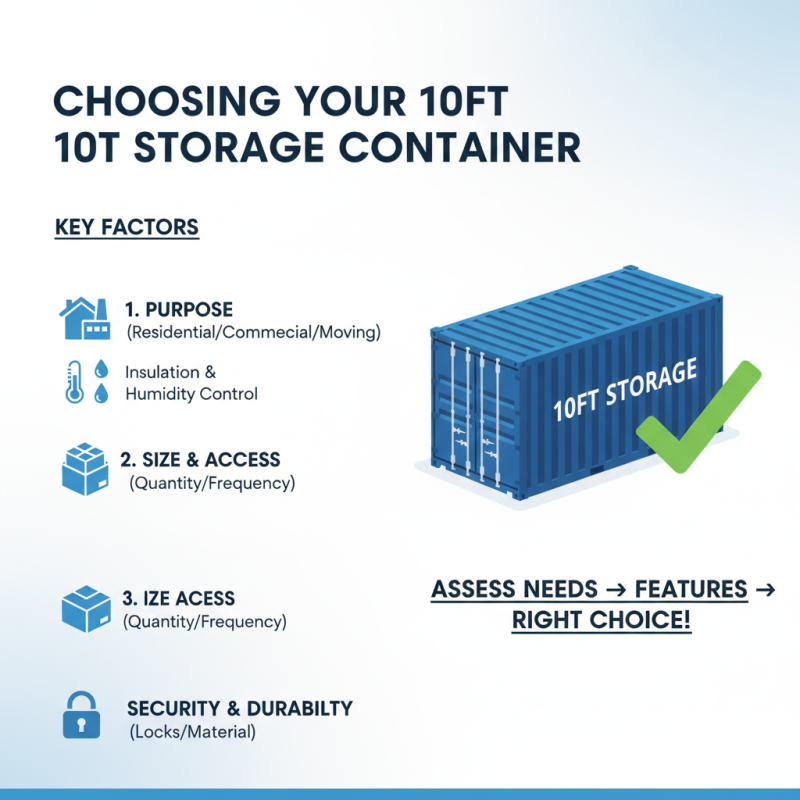
When selecting the right 10ft storage container for your needs, several key factors should be considered to ensure it meets your requirements effectively. First, assess the purpose of the container. Whether it’s for residential storage, commercial use, or moving, understanding your specific needs will help you determine the necessary features, such as insulation for temperature-sensitive items or humidity control for long-term storage.
Another important aspect is the container's condition. Opt for a unit that is either new or in good repair. Check for rust, dents, and leaks, as these issues can affect the safety and security of your items. Additionally, it’s essential to think about accessibility. Consider how frequently you will need to retrieve items from the container and choose a location that provides easy access, minimizing transportation hassles.
When it comes to logistics, evaluate how you will transport the container to your desired location. Ensure the size fits your space constraints, and consider any additional delivery fees or requirements. It’s also wise to think about security features such as lock options. A well-secured container provides peace of mind and protects your belongings from theft. These simple yet effective tips will guide you in making an informed choice about your storage container needs.
Understanding Storage Container Types and Their Uses
When selecting a 10ft storage container, understanding the different types available can significantly influence your decision and ensure that your specific needs are met. Primarily, storage containers can be categorized into two types:
general-purpose containers and
specialized containers.
General-purpose containers are commonly used for organizations looking to store items securely during relocation or renovation.
According to the Container Shipping Industry Market Report, as of 2022, approximately 80% of businesses prefer these versatile units due to their durability and ease of transport.
On the other hand, specialized containers, like those designed for refrigeration or hazardous materials, cater to niche requirements. The
Global Portable and Mobile Storage Containers Market Report highlights that around 25% of industries now require specialized containers for safe storage and transit of temperature-sensitive goods or chemicals, driven by the need for compliance with safety regulations.
Choosing the right type not only affects functionality but can also impact cost-effectiveness, as businesses often seek containers that offer the best return on investment in terms of durability, security, and adaptability for various uses.
Assessing Your Space and Accessibility Requirements
When selecting a 10ft storage container, assessing your space and accessibility requirements is crucial. Ideally, you should start by evaluating the area where the container will be placed. According to a recent report by the Containerization International, ensuring that there is at least three feet of clearance on all sides allows for easy access and ventilation. Additionally, understanding the surface type—whether concrete, gravel, or grass—can greatly impact the stability and overall condition of the container over time.
Accessibility is another key factor to consider. Make sure there is sufficient room for truck access if the container needs to be delivered or moved. Research suggests that over 30% of container mishaps can be attributed to accessibility issues during placement and retrieval. Furthermore, consider the height of the area: a container can be 8.5 feet tall, so be mindful of overhead obstacles like tree branches or power lines. By strategically assessing these components, you can ensure that your 10ft storage container meets your specific needs effectively.
Evaluating Security Features for 10ft Storage Containers
When evaluating the security features of a 10ft storage container, it is vital to prioritize robust locking mechanisms. Standard padlocks may not provide adequate protection. Instead, look for containers equipped with heavy-duty locks, bolt or lock boxes that shield the locking mechanism from tampering, and reinforced doors. These features significantly enhance security and act as a deterrent against break-ins.
Another key aspect to consider is the material and construction of the container. Choose containers made from high-grade steel with anti-corrosive finishes, which not only provide sturdiness but also lifespan longevity. Inspect the layout of the container as well; containers without windows are often more secure since they limit points of vulnerability.
While evaluating your options, don't overlook the importance of location and accessibility. A well-lit and populated area offers natural surveillance, adding an extra layer of security. Additionally, consider investing in a storage container with integrated security systems, such as alarms or surveillance cameras, which can provide real-time monitoring. Implementing these tips will ensure that your 10ft storage container not only meets your space needs but also offers peace of mind when it comes to security.
Cost Considerations and Budgeting for Your Storage Solution
When considering a 10ft storage container, budgeting is a critical factor that cannot be overlooked. According to a recent report by the Self Storage Association, the average monthly rental cost for a storage unit can range between $100 to $300, depending on location and demand. However, purchasing a storage container can provide a more economical long-term solution. For example, a new 10ft container typically costs between $2,000 and $5,000, while used options can be found for as low as $1,000. This upfront investment might initially seem substantial, but when calculated over time, especially in areas with rising rental costs, ownership often proves financially viable.
In addition to the purchase price, other cost considerations include maintenance, transport, and insurance. A study from Storage Newsletter highlights that ongoing maintenance for containers can average around $100 per year, which is significantly lower than the continuing costs associated with rented facilities. Furthermore, potential buyers should factor in transport fees which can range from $200 to $500 depending on distance. It’s crucial to budget for insurance as well, which can protect your investment and range from $200 to $600 annually. Thus, thoroughly assessing all these financial aspects will ensure that you make an informed decision aligned with your ongoing storage needs.