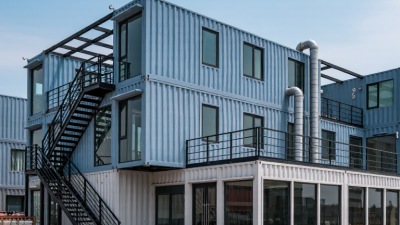
China Top Converted Shipping Containers for Global Buyers

Global demand for practical, modular space is changing how buyers view used freight equipment. According to UNCTAD’s Review of Maritime Transport 2024, more than 80% of global merchandise trade by volume moves by sea. That huge logistics system continually releases standard containers into secondary markets. Some become offices, workshops, cafés, storage rooms, or compact accommodation.

This guide examines China’s top converted shipping containers for global buyers. It focuses on structure, insulation, ventilation, electrical planning, corrosion control, and export preparation. The right conversion begins with the box itself. A wind-and-watertight 20-foot container may offer a strong steel shell, but its original floor can contain chemical residues or hidden damage. Inspection matters. More than appearance.

ISO 668 defines common container dimensions, helping buyers compare 20-foot and 40-foot units across suppliers. However, international transport standards do not automatically approve a converted unit for local occupancy. The World Bank’s Logistics Performance Index 2023 also shows how customs, infrastructure, and shipment reliability vary between markets. Buyers must therefore verify destination rules, foundation requirements, fire safety, and electrical certification before ordering.

China’s manufacturing ecosystem can provide flexible layouts, factory-built modules, and competitive lead times. Yet low prices sometimes hide thin insulation, weak welding, poor drainage, or unclear documentation. That deserves honest attention. A container with bright cladding may still perform badly in humid weather. This article compares practical designs, supplier capabilities, quality checks, and delivery considerations. The goal is not to promote one universal model, but to help buyers choose converted shipping containers with clearer evidence, safer specifications, and fewer expensive surprises.
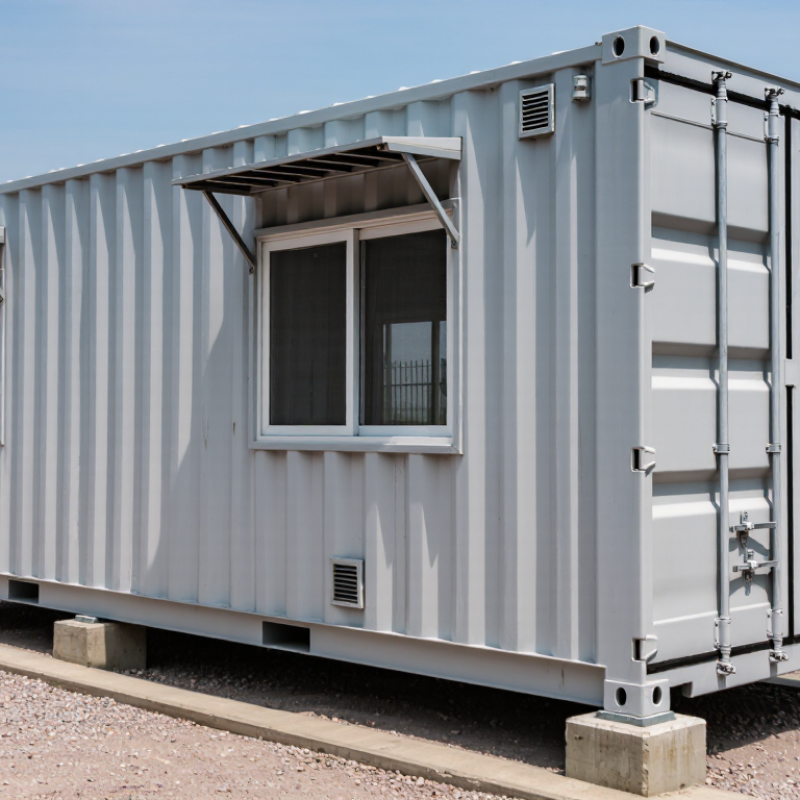
China Top Converted Shipping Containers for Global Buyers

Global Shipping Context: Over 80% of World Trade Moves by Sea

China Top Converted Shipping Containers for Global Buyers

Global Shipping Context: Over 80% of World Trade Moves by Sea

More than 80% of global trade moves by sea, according to widely cited maritime industry estimates. This reality makes converted shipping containers important for international buyers. They can become offices, storage rooms, workshops, clinics, or temporary accommodation. Their steel frames are designed for demanding transport conditions. However, conversion quality matters as much as the original container.

Experienced buyers should inspect wall thickness, floor condition, door alignment, welds, ventilation, and insulation. A container may look strong outside but hide corrosion near the base. That assumption is often wrong. Ask for material specifications, production photos, load details, electrical diagrams, and water-resistance test records. Clear documentation improves trust before shipment.

Sea transport also affects design decisions. Poorly protected windows, roofs, and external fittings may suffer during handling or long ocean voyages. Coatings should suit humid and salty environments. Internal layouts must consider destination climate, local building rules, electrical standards, and port restrictions. One detail is easy to miss: shipping dimensions can influence inland delivery costs after arrival. A practical plan should include lifting points, unloading access, packaging protection, and inspection steps. No design is perfect on paper. Careful review remains necessary.

Standard Container Sizes: 20-Foot and 40-Foot Units Under ISO 668

For global buyers, converted shipping containers begin with two ISO 668 sizes: 20-foot and 40-foot units. A standard 20-foot container measures about 6.058 meters long, 2.438 meters wide, and 2.591 meters high externally. The 40-foot version doubles the length to approximately 12.192 meters. Both usually share the same external width and height.

This standardization supports predictable transport planning. A 20-foot unit offers roughly 33 cubic meters of internal volume, while a 40-foot unit provides about 67 cubic meters. Actual space changes with wall thickness, insulation, flooring, and interior fittings. ISO 668 also defines dimensional and rating requirements, but the final payload depends on the container plate and inspection records. Check those documents carefully.

UNCTAD’s Review of Maritime Transport 2024 reported about 12.3 billion tonnes of seaborne trade in 2023, confirming the scale of container logistics. Containerized cargo also exceeded 160 million TEU that year. These figures explain why standard dimensions matter for converted units moving between ports, trucks, and temporary sites. In practical inspections, door alignment, corner posts, roof condition, and floor treatment deserve close attention. A fresh coating can hide corrosion. It happens.

A 40-foot unit may seem more economical, yet site access can change the decision. Narrow roads, crane limits, and local foundation conditions often favor two 20-foot units. My earlier assumption was simple: bigger meant better. Field planning proved otherwise. Dimensions are only the beginning.

China Top Converted Shipping Containers for Global Buyers - Standard Container Sizes: 20-Foot and 40-Foot Units Under ISO 668
Specification 20-Foot Standard Unit 40-Foot Standard Unit Practical Buyer Information
ISO 668 Reference Dimensions and Capacity
Nominal external length 6,058 mm
19 ft 10 in
12,192 mm
40 ft
Nominal container length classification under ISO 668.
External width 2,438 mm
8 ft
2,438 mm
8 ft
The common external width supports international intermodal transport.
External height 2,591 mm
8 ft 6 in
2,591 mm
8 ft 6 in
These are standard-height units, not high-cube units.
Typical internal length Approximately 5,898 mm Approximately 12,032 mm Actual internal dimensions vary slightly by manufacturer, lining, and container age.
Typical internal width Approximately 2,352 mm Approximately 2,352 mm Allow additional clearance for insulation, wall panels, and service cavities after conversion.
Typical internal height Approximately 2,393 mm Approximately 2,393 mm Finished ceiling height is lower after flooring, insulation, lighting, and HVAC installation.
Typical door opening Approximately 2,340 mm wide × 2,280 mm high Approximately 2,340 mm wide × 2,280 mm high Door dimensions should be confirmed before selecting oversized equipment or furniture.
Approximate internal floor area 13.9 m² 28.3 m² Calculated from typical internal length and width; conversion layouts reduce usable area.
Approximate internal volume 33.2 m³ 67.7 m³ Nominal cargo volume; finished conversion volume depends on the selected fit-out system.
Typical empty weight Approximately 2,200–2,400 kg Approximately 3,700–4,000 kg Tare weight varies with steel grade, flooring, doors, fittings, and repair history.
Common maximum gross mass Up to approximately 30,480 kg Up to approximately 30,480 kg Always confirm the CSC safety plate, manufacturer data plate, and local transport limits.
Typical Converted Container Formats for Global Buyers
Site office or security cabin Recommended: 20-foot unit Recommended: 40-foot unit for multiple workstations Can include insulated wall and ceiling panels, electrical distribution, LED lighting, windows, personnel doors, desks, and air conditioning.
Retail kiosk or mobile sales unit Suitable for compact retail counters Suitable for larger display and storage layouts Typical modifications include serving windows, external canopies, display lighting, shelving, flooring, and customer-facing finishes.
Accommodation module Suitable for a compact room or studio layout Suitable for bedroom, living, or multi-room layouts Requires insulation, ventilation, electrical systems, plumbing, fire protection, and compliance with the destination building code.
Kitchen or food-service unit Suitable for compact preparation and serving Provides more room for preparation, storage, and service areas Food-grade surfaces, extraction, drainage, water supply, grease management, and local sanitary approval may be required.
Toilet and shower module Suitable for compact sanitary facilities Suitable for multiple cubicles or separate wet areas Layout must account for water tanks, pumps, drainage, waterproofing, ventilation, and accessibility requirements.
Workshop or equipment room Suitable for tools and compact machinery Suitable for larger equipment and workbenches Check floor loading, ventilation, electrical capacity, lifting access, and equipment anchoring before conversion.
Recommended finished ceiling height Typically 2,100–2,250 mm Typically 2,100–2,250 mm Final height depends on insulation thickness, ceiling services, flooring buildup, and local code requirements.
Typical conversion considerations Structural openings, corrosion treatment, thermal insulation, vapor control, fire safety, electrical installation, plumbing, ventilation, transport lifting points, and weatherproof sealing Converted containers are engineered products; drawings and local approvals should be reviewed before fabrication and installation.
Purchasing and Delivery Checklist
Container condition New-build, cargo-worthy used, or one-trip units may have different corrosion, flooring, and repair conditions. Request dated inspection photographs, condition reports, and the container identification number before purchase.
Compliance documents ISO 668 dimensional reference, CSC plate where applicable, electrical test records, material specifications, and conversion drawings Import, building, electrical, fire, sanitation, and accessibility requirements differ by destination country.
Transport and placement Confirm road restrictions, lifting method, crane access, foundation design, and final site clearance. Allow clearance for doors, service connections, maintenance access, and safe placement on level supports.

Conversion Types: Offices, Homes, Retail Units, Workshops, and Clinics

China Top Converted Shipping Containers for Global Buyers

Conversion Types: Offices, Homes, Retail Units, Workshops, and Clinics

Converted shipping containers now serve as compact spaces for offices, homes, retail units, workshops, and clinics. Their standardized steel frames support repeatable production and easier international transport. ISO 668 defines common container dimensions, helping designers plan furniture, insulation, doors, and service openings accurately.

Space is precious. Every centimeter matters.

For offices, practical layouts include a desk, cable channels, acoustic panels, and a shaded entrance.

Homes need stronger insulation, daylight, drainage, and careful control of indoor humidity.

Retail units benefit from wide glazing, secure shutters, and visible product walls.

Workshops require reinforced floors, ventilation, lighting, and separated storage zones.

Clinics demand more discipline, including washable surfaces, hand-washing points, safe electrical systems, and controlled patient flow.

A metal box is not automatically suitable.

Energy performance deserves close attention.

The International Energy Agency’s Buildings report states that buildings consume about 30% of global final energy and produce roughly 26% of energy-related emissions. Insulation, efficient lighting, and passive shading can reduce operating pressure.

UNCTAD’s Review of Maritime Transport 2024 records global seaborne trade at about 12.3 billion tonnes in 2023, showing the scale of international logistics behind container availability.

However, transport distance, local climate, foundation design, and site services still affect total cost. In practice, early drawings often miss drainage or maintenance access. That mistake is expensive. Reliable conversion depends on documented materials, qualified inspections, and honest limits, not attractive exterior panels alone.

Conversion Process: Inspection, Cutting, Reinforcement, Insulation, and Fit-Out

China Top Converted Shipping Containers for Global Buyers

A reliable conversion begins with a detailed inspection. Technicians check the container’s corner posts, floor, roof, doors, and welds. Rust around structural joints needs careful evaluation. Water stains may reveal hidden leaks. Dimensions are measured before any cutting begins. Small errors can affect overseas transport, lifting, and installation.

Cutting openings requires temporary support and engineered reinforcement. Steel frames are welded around doors and windows. The structure must remain stable after modification. Insulation follows, often using rigid panels or spray-applied materials. The team then seals joints against moisture and condensation. Electrical wiring, lighting, plumbing, flooring, and wall panels complete the fit-out. A clean finish matters, but hidden workmanship matters more.

Tips: Request inspection photographs, material specifications, and a clear modification drawing. Confirm insulation thickness and electrical requirements with local professionals. Ask for water testing before shipment. In practice, even good plans can change after the first cut. Not every detail is perfect. A careful review can catch uneven flooring, weak sealant, or poorly aligned doors before delivery. Final checks should include lifting points, ventilation, drainage, and secure internal fixtures. These details reduce surprises for global buyers and support safer installation on site.

Buyer Standards: CSC Safety Rules, Load Ratings, Energy Efficiency, and Lifespan

China Top Converted Shipping Containers for Global Buyers

For global buyers, CSC compliance comes before paint, windows, or interior design. The International Maritime Organization’s CSC Convention requires an approved safety plate, structural checks, and periodic examinations. Under the periodic examination scheme, inspections generally occur within five years initially, then at intervals not exceeding 30 months. A conversion can invalidate assumptions about corner posts, side walls, and roof strength. Cutting a large opening requires engineered reinforcement and documented inspection.

Load ratings need equal care. Many 40-foot dry containers show payloads close to 28 tonnes, but the exact figure depends on tare weight, floor condition, and the approved modification plan. Point loads matter. A concentrated machine load can damage flooring, even when total weight seems acceptable. Buyers should request the original plate, welding records, floor specifications, and a new structural assessment. A fresh repaint proves very little.

Steel is not energy efficient by itself. The International Energy Agency’s 2024 Global Status Report states that buildings consume about 30% of global energy and produce roughly 26% of energy-related emissions. Converted units need continuous insulation, sealed penetrations, thermal breaks, ventilation, and correctly sized cooling equipment. Condensation often appears behind interior panels. It is easy to miss. Industry service estimates commonly place container working life near 10–15 years, though protected units may last longer. I would not promise 25 years without climate, corrosion, and maintenance evidence. Even experienced buyers sometimes underestimate coastal rust and roof drainage.