What Is the Best 10ft Shipping Container from China?
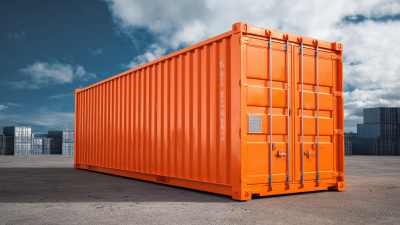
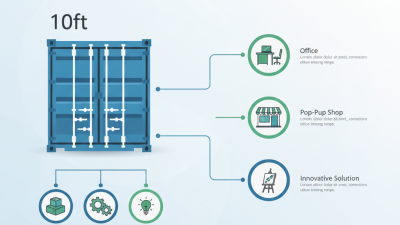
Choosing the best 10ft shipping container from China is not simply a matter of finding the lowest factory price. The right decision depends on cargo type, transport distance, site access, and expected service life. A compact 10ft shipping container can fit narrow driveways, small warehouses, farms, and urban construction sites. However, limited space also demands careful planning.
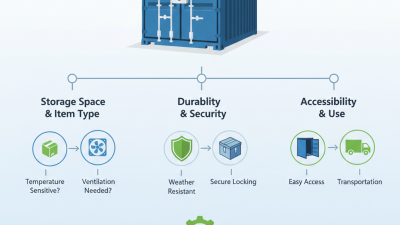
John Fossey, a respected container equipment specialist at Drewry, offers a useful reminder: “A container is more than a steel box; it is a logistics asset.” This principle matters when comparing Chinese suppliers. Buyers should examine steel thickness, welding quality, door alignment, floor treatment, ventilation, paint systems, and corrosion protection. Small details become expensive problems later.
Look closely.
A reliable manufacturer should provide clear specifications, production photographs, inspection records, and consistent communication. The container should be suitable for its intended transport and storage environment. Buyers must also confirm applicable international requirements, including structural certification and shipping compliance, before placing an order. Product claims should be checked independently whenever possible.
Price still matters, but it can be misleading. A cheaper unit may use thinner materials, weaker hinges, or inadequate coating preparation. Conversely, an expensive container is not automatically better. I have found that supplier transparency often reveals more than a polished catalogue. Still, this approach has limits. Factory documents cannot replace physical inspection, and photographs may hide uneven welds or poor drainage.
This guide examines the main choices, trade-offs, and warning signs. It aims to help readers select a 10ft shipping container that performs reliably, not merely one that looks attractive on paper.
Define “Best” Using ISO 668 and CSC Safety Requirements
What Is the Best 10ft Shipping Container from China?
The best 10ft shipping container is not simply the newest or cheapest unit. It should match ISO 668 dimensions, tolerances, and corner-fitting requirements. These details support safe handling by compatible lifting and transport equipment. Ask for measured external dimensions, container rating, and technical drawings. Do not trust a label alone.
CSC compliance is equally important.
A valid CSC safety approval plate should show the container number, manufacture date, maximum gross mass, stacking test value, and racking test value. Inspect the frame, corner posts, doors, locking bars, floor, and roof. Rust on the surface may be manageable. Distorted corner posts or cracked welds are more serious. A clean photograph can hide these defects, so an independent inspection is wise. In practice, buyers sometimes focus too much on paint and miss structural wear. That mistake is easy to make.
Tips:
Request recent photos of all eight corners, the door seals, and the CSC plate. Compare the plate with the container number. Check door operation and floor condition in person when possible. Confirm the intended cargo weight before purchase. “Best” depends on evidence. A perfect unit is unlikely, and careful review remains necessary.
Evaluate Payload, Tare Weight, and 28,000kg CSC Limits
What Is the Best 10ft Shipping Container from China?
For a 10ft shipping container, payload must be checked beside tare weight. ISO 668:2020 lists standard container design requirements, but it does not guarantee one universal operating weight. Many 10ft units weigh about 1,300–1,500kg empty. If the supplier states a 28,000kg maximum gross mass, the theoretical payload is about 26,500–26,700kg. Real cargo capacity may be lower because of floor strength, lashing equipment, and local transport limits.
The CSC safety plate is decisive. Under the IMO International Convention for Safe Containers, the plate shows the permitted maximum gross mass for that individual container. A 28,000kg limit may be a buyer’s requested operating cap, not the container’s original CSC rating. ISO 668 commonly allows higher gross ratings for standard containers, often near 30,480kg, but the plate and carrier rules still control. The World Shipping Council’s verified gross mass guidance also requires cargo, packaging, and container tare to be weighed accurately. A small weighing error can become an expensive port delay.
Tips:
Request the CSC plate photo, tare weight certificate, payload calculation, and floor-load specification before ordering. Ask for calibrated weighing records, not estimates. I would also leave a practical margin below 28,000kg. The arithmetic looks simple. Field conditions are not. A damp timber floor, uneven cargo, or weak lifting points can change the decision. Recheck the figures against your inland route and destination terminal.
Assess Corten Steel, Wind Resistance, and Door Security
What Is the Best 10ft Shipping Container from China?
A strong 10ft shipping container starts with suitable Corten steel, not attractive paint. Weathering steel develops a protective surface layer when exposed to air and moisture. This layer slows deeper corrosion, but it is not magic. Poor drainage, salt air, and trapped water can still damage panels and welds. Ask for steel thickness, weld quality, and corrosion inspection records. Check the floor edges carefully. They often reveal neglected moisture problems.
Wind resistance depends on the whole installation. A compact container may handle strong weather, but only when placed on a level foundation and secured correctly. Empty units can move more easily than loaded ones. Anchor points, twist locks, or ground bolts should match the site conditions. Open fields, coastal areas, and elevated platforms require closer engineering review. Do not trust a general wind claim without test details or loading assumptions.
Door security deserves equal attention. Look for double locking rods, protected handles, sound hinges, and a recessed area for the padlock. The doors should close evenly, without forcing the locking bars. Rubber seals must touch the frame continuously, especially at the lower corners. A hidden weakness matters. During inspection, test the doors after loading because frame movement can change alignment. I would also examine the underside, even when the exterior looks new. That extra check is easy to skip, and sometimes it exposes the real problem.
Rank Chinese Suppliers by Factory Quality, Certification, and Total Cost
For a 10ft shipping container from China, supplier ranking should begin at the factory floor, not the sales office. Tier 1 suppliers maintain automated welding lines, measured steel thickness, and documented paint preparation. Their doors should open smoothly, with even seals and no visible frame distortion. In my inspections, small alignment defects often predicted larger repair costs later.
Tier 2 suppliers may offer acceptable production, but quality depends more heavily on manual checks. Ask for weld inspection records, steel mill certificates, coating specifications, and recent factory photographs. Certification should match the container’s intended use and destination. Useful documents may include ISO 9001, CSC approval, material certificates, and third-party inspection reports. Paperwork alone proves little.
Tier 3 suppliers usually compete through the lowest quoted price. Their containers can still work for basic storage, but inconsistent coatings, thin components, and weak after-sales support create risk. I would rank them lower unless independent inspection confirms the build. Total cost includes the unit price, inland transport, port charges, inspection fees, import duties, and possible repairs. Request a landed-cost quotation in writing. It exposes surprises.
A strong supplier communicates clearly about production tolerances and replacement parts. That matters. Yet my ranking would remain provisional until one sample arrives and survives real handling. A clean factory visit can mislead when the production batch differs. An overlooked detail can change the decision.
What Is the Best 10ft Shipping Container from China?
Anonymous supplier profiles ranked by factory quality, certification readiness, and estimated total cost competitiveness.
Scores are normalized to a 100-point scale. Factory quality reflects production controls and inspection capability; certification readiness covers commonly required ISO 9001 and CSC documentation; total-cost competitiveness combines indicative ex-works pricing, inland transport, export handling, and documentation costs. A higher score indicates a stronger overall value position.