10 Cargo Container Buying Tips for Global Buyers?

Buying a cargo container across borders can look simple on a price sheet. In practice, small differences in condition, dimensions, and delivery terms can change the total cost. A unit that appears clean in photographs may have a soft floor, stiff door hinges, or hidden roof damage. Details matter.

This guide presents ten practical buying tips for global buyers, from choosing a container type to checking the seller’s specifications. Compare the stated dimensions with your available site and transport plan. Ask for recent, well-lit photographs of the doors, roof, corner castings, and interior floor. If possible, arrange an in-person inspection or hire a qualified independent inspector. Small clues count. Rust around a seam, for example, deserves a closer look rather than an instant yes or no.

Condition labels can vary between sellers, so request a written description and clarify what repairs are included. Confirm the container’s age, identification details, delivery method, and any inspection documents relevant to its intended use. Requirements and accepted documentation may differ by destination, so verify them with the carrier or a qualified local professional before purchase. Get the full landed cost in writing, including transport, handling, and other stated charges. Then compare offers on equal terms, not just headline price. A checklist helps, but it cannot replace careful questions. Even experienced buyers can miss something when a deal feels urgent. Pause, review the details, and choose a supplier who answers clearly.
10 Cargo Container Buying Tips for Global Buyers?

Define Cargo Requirements and ISO 668 Container Sizes (20 ft: 6.058 m)

Before comparing prices, write down what the cargo actually needs: length, width, height, total weight, loading method, and destination handling equipment. Measure the largest item, including pallets and protective packaging. Measure the load first. A 20-foot container may look roomy, but a wide machine can still be difficult to load through its doors.

Under ISO 668, a standard 20-foot container has an external length of 6.058 m. Its external width is generally 2.438 m, while standard height is about 2.591 m. These are outside dimensions, not usable space. Internal dimensions and door openings vary with container design and condition, so confirm the supplier’s specification sheet before purchase. A tape measure at the depot can reveal details a drawing misses.

Match the container type to the cargo, not just its nominal size. Check the tare weight and maximum gross weight on the container’s data plate, then compare them with the packed shipment and transport limits. For palletized goods, sketch the floor layout and allow room for securing materials and forklift access. I have seen buyers focus on length and overlook door clearance; it is an easy mistake. Still, a sketch is only a plan. Verify actual dimensions before payment, especially for older or repaired units.

Compare New, One-Trip, and Used Containers by Condition and Cost

New containers offer the cleanest appearance and longest usable life, but their premium rarely pays back for short-term storage. One-trip units usually balance price and condition: they have made one loaded voyage, yet salt spray, forklift contact, and uneven floors still happen. Used units cost less upfront. Their final price can rise quickly if doors bind or roof patches leak. UNCTAD’s Review of Maritime Transport 2024 reported 858.8 million TEU of global port throughput in 2023. That scale helps explain why used stock varies widely by location and handling history; the figure is not a container-condition rating.

Compare delivered cost, not just the seller’s quote. Ask for dated photos of the roof, floor, door seals, corner posts, and interior, then inspect in person when possible. The Institute of International Container Lessors’ inspection guidance offers a useful framework for checking structural damage and repairs. A valid inspection record matters more than fresh paint. That shortcut misleads. For a remote site, a one-trip unit may justify its extra cost if dry storage and clean interiors matter. For a brief project, a sound used unit can be the smarter buy. I would still budget for small repairs; condition labels are not perfectly consistent.

10 Cargo Container Buying Tips for Global Buyers? - Compare New, One-Trip, and Used Containers by Condition and Cost

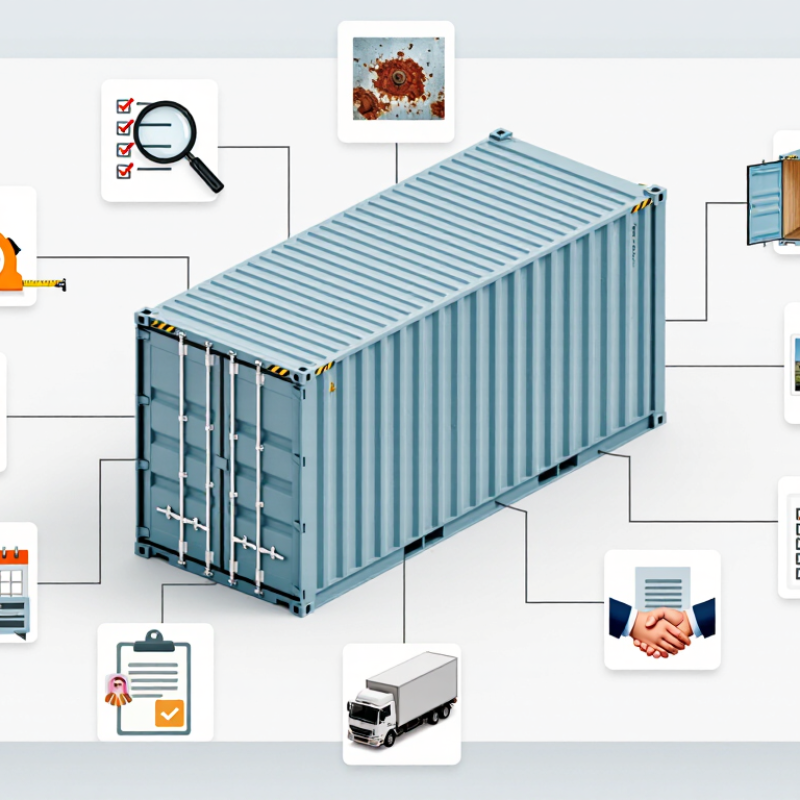
# Buying Tip New One-Trip Used What to Verify
1 Set the intended use Suitable for long-term storage or demanding projects where a clean condition matters. Often a good fit when near-new appearance and condition are priorities. Can suit storage or projects when wear is acceptable and the unit is sound. Clarify whether the container is for cargo transport, storage, or modification.
2 Compare total cost, not just price Typically the highest purchase-price category. Usually priced between new and used, with variation by location and availability. Often the lowest initial price, but repairs or delivery can change the overall cost. Request a quote covering transport, loading, taxes, unloading, and any required repairs.
3 Understand condition labels Generally unused, though handling and storage can still leave marks. Generally made one international trip after manufacture; minor handling marks may be present. Condition can range from serviceable to heavily weathered; age alone does not define quality. Ask for a written grade definition, recent photos, and an inspection report for the specific unit.
4 Inspect the structure Check for manufacturing defects, damage from handling, and sound welds. Look for dents, bent frame members, and damage from loading or transport. Pay close attention to corner posts, rails, cross-members, and floor support. Check that the frame is square and structural members are not visibly bent, cracked, or badly corroded.
5 Check for water ingress Inspect seals and roof even if the unit has not been used for cargo. Test doors and inspect roof panels for dents or signs of leaks. Look for daylight, damp patches, rust holes, and water staining inside. View the interior in daylight with doors closed, then check seals, roof, walls, and floor.
6 Test the doors and hardware Doors should operate smoothly and locking gear should be complete. Check that door alignment and seals have not been affected by handling. Stiff hinges, worn seals, or damaged locking rods may require repair. Open and close both doors; inspect hinges, handles, locking rods, cams, and gasket condition.
7 Choose size and payload carefully Available in standard sizes; confirm the exact model and specification. Commonly available in standard sizes, but stock may vary by depot. Dimensions and condition can differ; confirm the individual unit's data plate. Compare external and internal dimensions, tare weight, maximum gross mass, and payload on the unit plate.
8 Confirm shipping eligibility Check that the unit has the required safety approval for the planned movement. Verify approval and inspection status rather than relying on the condition label. A used container may need inspection or repair before it can be transported as cargo. For international cargo use, confirm applicable CSC safety approval and current examination or inspection requirements.
9 Plan delivery and placement Delivery may involve lead time if the requested specification is not locally stocked. Availability depends on depot inventory and delivery distance. Local stock can reduce haulage distance, but inspect before dispatch. Check site access, ground bearing, overhead clearance, unloading equipment, and delivery appointment terms.
10 Get terms and records in writing Record the specification, condition, delivery date, and included items. Document the stated trip history and any disclosed cosmetic damage. List agreed repairs, exclusions, and the condition accepted at purchase. Keep the invoice, unit identification, inspection evidence, delivery terms, and warranty or return conditions.

Cost comparisons are general: actual prices depend on size, specification, condition, location, availability, transport, and local requirements.

Check Tare, Payload, and CSC Plate; Many Units Are Rated to 30,480 kg

A container’s rated gross mass is not its payload. Many standard units show a maximum gross mass of 30,480 kg, but that figure includes the container itself and its cargo. Tare is the empty container’s weight. Subtract tare from maximum gross mass to estimate the available payload. For example, a unit with a 3,800 kg tare and a 30,480 kg gross rating has a theoretical payload of 26,680 kg. Actual limits may differ.

Tips: Compare the tare, payload, and maximum gross mass shown on the specific unit’s plate. Check that the plate is legible and matches the seller’s documents. Ask for a clear photo before arranging transport. Small details matter.

The CSC plate identifies safety approval information and helps buyers check whether a unit is suitable for its intended use. Do not rely on a general listing or assume every container has the same rating. Inspect for damaged corner fittings, heavy corrosion, or repairs that could affect handling. A plate can be present while the unit still needs a careful condition check. I would also confirm the loaded weight with the carrier; this step is easy to overlook when buying remotely.

Inspect the Frame, Floor, Doors, and Seals Before Purchase

UNCTAD’s Review of Maritime Transport 2024 reports that global container port throughput reached 858.9 million TEUs in 2023, up 2.4% from 2022. With containers moving through busy networks, condition matters. A fresh coat of paint can look reassuring, but it cannot prove the structure is sound. Check the corner posts and rails for bends, deep corrosion, cracked welds, or signs of impact. Look underneath, too.

Inside, walk the floor carefully. Watch for soft spots, split boards, protruding nails, and daylight entering through holes. Open and close both doors; they should swing without force and lock evenly. Examine the rubber gaskets for gaps, tears, or flattened sections. A small leak can damage cargo. Take clear photos and record defects before agreeing on a price. A walk-around is useful, but it is not a full technical survey.

Tips: Bring a flashlight, gloves, and a simple inspection checklist. Test each latch, photograph damage, and ask for repair records where available. If the container will carry sensitive goods, consider an independent inspection. I’d still question any rushed sale: good checks reduce uncertainty, but they cannot reveal every hidden repair.

Verify CSC Inspection Status: First Exam Within 5 Years, Then at ≤30-Month Intervals

Before paying for a used cargo container, check its CSC safety approval plate and inspection history. Under the periodic examination scheme, the first examination must take place within five years of manufacture. Later examinations must occur at intervals no longer than 30 months. Compare the plate’s dates with the seller’s records, and ask for clear photos if you cannot inspect the unit in person. Dates matter.

Do not rely on a recent-looking paint job. Rust around corner castings, damaged door hinges, or a warped frame may deserve closer review, even when paperwork appears current. Ask whether the container follows a periodic examination scheme or an approved continuous examination program, and request supporting records. A missing report does not prove a container is unsafe, but it leaves a gap worth resolving before shipment or storage. I might overlook a small detail in a photo; an independent inspection can catch what I miss.

Tip: Record the manufacture date, last examination date, and next due date before purchase. Check that the container number on the plate matches the documents. If dates conflict, pause and verify them.