What Is the Best Shipping Container Shed in 2026?

Choosing the best shipping container shed in 2026 means looking beyond a low price or fresh paint. The right option should match what you plan to store, the space available, and the weather it will face. Measure the site before comparing models. Check door clearance, floor condition, ventilation, insulation, and how water drains around the base. A damp corner can ruin tools long before a shed looks worn. Small details matter.

Some buyers need a simple, lockable space for garden tools. Others need room for bicycles, a workbench, or seasonal equipment. Those uses call for different layouts, door widths, and interior finishes. A standard container may offer strength, but it can feel cramped or dark without thoughtful modifications. And not every upgrade is worth its cost. Compare the total price, including delivery, site preparation, and any changes needed for access or airflow.

A reliable recommendation should come from verifiable product details and relevant building experience, not a made-up endorsement. No source material or verifiable expert quotation was provided for this introduction, so I can’t responsibly attribute a statement to a named specialist. This guide will compare practical designs, key features, common trade-offs, and ownership considerations. It will also point out where a “best” choice depends on your needs rather than a single ranking. Because the best shipping container shed is useful every day—not merely impressive in a listing photo.
What Is the Best Shipping Container Shed in 2026?

What a Shipping Container Shed Is and How It Works

A shipping container shed is a steel cargo container adapted for storing tools, equipment, or seasonal supplies. Its corrugated walls and heavy doors form a weather-resistant shell, while the original steel floor may support substantial loads. It is a sturdy shell. But it is not automatically ready for every climate or purpose.

The container sits on a level base, such as compacted gravel or concrete pads, to reduce shifting and keep water from collecting underneath. Original cargo doors provide wide access, while a smaller personnel door can make daily trips easier.

Airflow matters. Vents help release heat and moisture; without them, condensation can form on cool steel and dampen stored items. Insulation may help, but gaps around doors and windows can still invite drafts.

Before cutting openings for windows or extra doors, consider how changes affect the container’s strength. Large cuts may need reinforced framing, which adds cost and work. That trade-off is easy to underestimate.

Check the roof and door seals after heavy rain, too; a small leak can be hard to spot among stored items. A shipping container shed can be practical, though its performance depends on the site, foundation, ventilation, and upkeep.

Main Types of Container Sheds Available in 2026

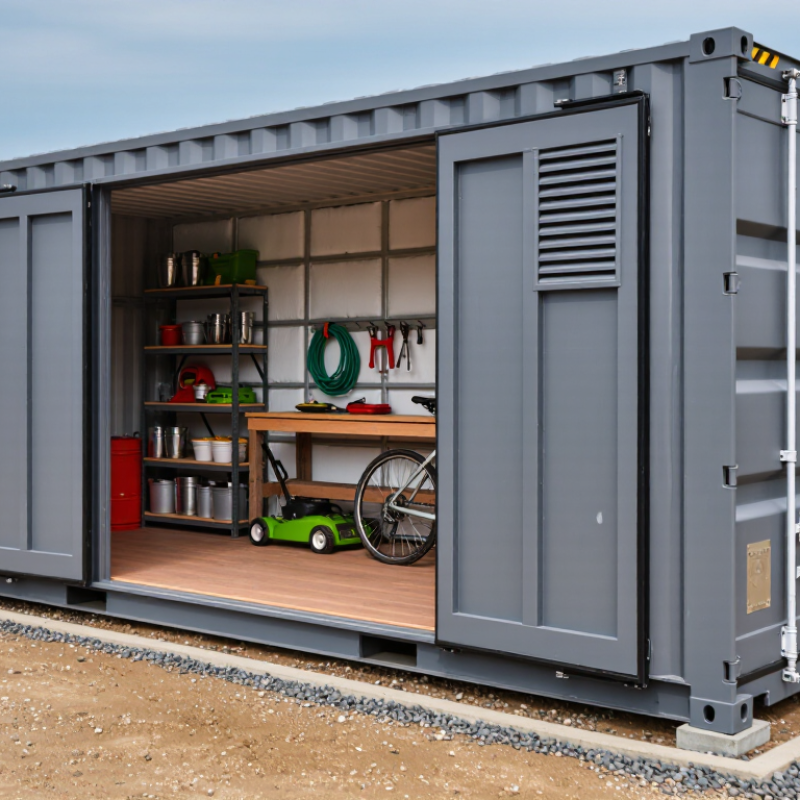
In 2026, container sheds generally fall into a few practical types. Open-sided canopy sheds protect equipment from rain while allowing quick access to lawn tools, bikes, or firewood. They suit frequent use, but wind-driven rain can still reach stored items. Fully enclosed sheds offer better weather protection and security for tools, seasonal furniture, and supplies. Look for ventilation, sturdy doors, and a floor suited to the load; a damp, unventilated interior can be a problem.

Workshop-style sheds add space for a workbench, lighting, and electrical fittings. Insulated versions can make temperature changes less severe, though insulation alone will not prevent condensation. Modular sheds, built from connected container sections, suit larger storage needs or divided work areas. Their size can be useful, but delivery access and ground preparation matter. That part is easy to underestimate. A level base and clear drainage help prevent settling and water pooling near the doors.

Tips: Match the shed to what you will store, not just its advertised capacity. Measure the widest item and leave room to move it. Check door clearance, ventilation, and the site’s drainage after rain. If you plan to work inside, consider daylight and safe electrical installation before choosing a layout. The perfect option is rarely perfect for every site.

How to Compare Size, Materials, Security, and Weather Resistance

A strong container shed starts with usable space, not its advertised length. ISO 668:2020 sets a standard 20-foot container’s external dimensions at about 6.06 by 2.44 metres. Interior clearance shrinks with wall lining, shelving, and door framing. Measure your largest tool, then leave room to turn it. Measure twice. A 40-foot unit may seem efficient, but a narrow site can make access awkward. Steel thickness and condition matter more than a fresh coat of paint. Inspect floor edges, corner posts, roof seams, and cut openings for rust or repairs. Ask for a condition report and clear photographs.

Security and weather protection depend on details. Look for a lockbox that shields the padlock, sound door hinges, and solid anchoring points. A heavy door is not secure if its frame flexes. NOAA’s 2023 disaster summary recorded 28 U.S. weather and climate events with losses of at least $1 billion each. That figure is not a shed-design rule, but it is a useful reminder to assess local wind, flood, and storm exposure. Check that the site drains away from the base, roof openings are sealed, and ventilation can limit condensation. A sealed steel box can still sweat inside. That part is easy to overlook. Add suitable coatings to exposed cut edges, and inspect them after wet seasons; no finish stays perfect forever.

What Is the Best Shipping Container Shed in 2026?

Compare standard container sizes by approximate interior floor area.

A 20-foot container provides about 149 square feet of interior floor area, while a 40-foot container provides about 304 square feet. Figures are approximate; actual dimensions vary by container. For a shed, also inspect the steel condition, roof, door seals, and drainage. Weathering steel resists corrosion but is not corrosion-proof, and a lockbox can improve door security without making the container theft-proof.

How to Choose a Shed for Your Site, Storage Needs, and Budget

The best shipping container shed in 2026 is the one that fits your site before it fits your wish list. Measure gate width, turning space, overhead wires, and the delivery truck’s route. ISO 668:2020 lists standard external lengths of 6.058 metres for a 20-foot container and 12.192 metres for a 40-foot container; both are about 2.438 metres wide. That footprint excludes room to open doors or work safely around the shed. Measure twice.

Match the interior to what you will store. A mower needs a clear doorway and a firm, level floor; boxed tools need dry air and shelves that do not block ventilation. NOAA’s 1991–2020 U.S. Climate Normals provide local temperature and precipitation averages, useful for anticipating heat, rain, and condensation risks. Averages are not guarantees, though. For damp or hot locations, budget for ventilation, insulation, and weather sealing instead of assuming steel walls will protect everything.

Compare the full installed cost, not just the container price. Include delivery, lifting equipment, site preparation, anchoring, drainage, and any interior fit-out. A gravel pad may cost less, but it can settle or hold water if poorly prepared. Ask suppliers for written delivery requirements and inspect the container for dents, leaks, and door alignment before accepting it. One detail is easy to miss: a longer shed may be cheaper per square metre, yet impossible to position on a tight site.

What Is the Best Shipping Container Shed in 2026? — How to Choose a Shed for Your Site, Storage Needs, and Budget

The best option depends on usable floor area, access to the site, storage requirements, and local rules. Compare these common container shed configurations before arranging delivery or modifications.

Container Shed Option Approximate External Size Typical Storage Use Site and Access Suitability Relative Budget Key Considerations
20-foot standard container 20 ft long × 8 ft wide × 8 ft 6 in high Tools, garden equipment, seasonal items, and smaller quantities of materials Often easier to place on a constrained site than a 40-foot unit, but delivery-truck access and turning space are still required. Lower initial cost than a comparable 40-foot unit Check the internal width and door opening against the largest items you plan to store. Approximate internal dimensions are about 19 ft 4 in × 7 ft 8 in × 7 ft 10 in.
40-foot standard container 40 ft long × 8 ft wide × 8 ft 6 in high Bulkier equipment, long materials, or larger storage volumes Requires a long, level placement area and adequate room for delivery and positioning. Higher total cost; often lower cost per unit of floor area than a smaller unit Approximate internal dimensions are about 39 ft 5 in × 7 ft 8 in × 7 ft 10 in. Plan the layout so frequently used items remain accessible.
40-foot high-cube container 40 ft long × 8 ft wide × 9 ft 6 in high Tall equipment, stacked goods, shelving, or storage that benefits from extra headroom Needs the same long footprint as a standard 40-foot unit, plus clearance for its greater height during delivery and placement. Usually higher than a comparable standard-height unit Provides about 1 ft more external height than a standard container. Confirm overhead clearance and local height restrictions before ordering.
Container with added personnel door and windows Commonly based on a 20-foot or 40-foot container; final size depends on the base unit Storage areas that need frequent walk-in access or natural light Useful where opening the full cargo doors is inconvenient; modifications should be planned around the site layout. Higher than an unmodified container Door and window cutouts can affect the container structure. Use appropriate reinforcement, weather sealing, and secure locking hardware.
Insulated or climate-managed container shed Commonly based on a standard 20-foot or 40-foot container Items that need protection from temperature swings or condensation, subject to their specific storage requirements Requires suitable power and equipment access if mechanical heating, cooling, or dehumidification is used. Higher initial and operating costs Insulation alone does not control humidity. Select ventilation or climate equipment for the stored goods and local conditions.
Two-container or multi-container layout Varies by number, size, spacing, and any connecting structure Separate storage zones, larger site storage, or a wider covered work area Best suited to sites with room for multiple deliveries, foundations, and safe access between units. Highest overall cost among these options Connecting or altering containers may require structural work, drainage planning, and permits. Obtain site-specific advice before construction.

Before choosing: Check local zoning, building and fire requirements; confirm ground bearing capacity, drainage, foundation needs, delivery access, door clearance, and security. Dimensions are approximate and can vary by manufacturer and container condition. Budget comparisons are relative, not quoted prices; obtain current local delivery, preparation, and modification quotes.

Key Steps for Preparing, Installing, and Maintaining a Container Shed

Preparing a container shed starts with the ground, not the container. Check drainage after rain, locate buried utilities, and confirm local requirements before delivery. A compacted gravel pad or engineered footings can help keep the unit level. Measure the container, door swing, and delivery route; a tight gate can become an expensive surprise. Inspect the floor, roof, corner posts, and door seals for damage or corrosion. Measure twice.

During installation, use qualified lifting equipment and keep people clear of suspended loads. Set the container on stable supports, then check level across both length and width before anchoring it for local wind and ground conditions. Add ventilation before storing tools or garden supplies. Insulation can reduce condensation, but gaps around doors may still invite damp air. Water always finds gaps. A common planning miss is treating a container as automatically weatherproof; I would recheck the seals after the first heavy rain.

Maintenance is simple, but easy to postpone. Every few months, clear roof debris and drains, inspect seams and hinges, and look for bubbling paint or fresh rust. Touch up damaged coatings with a suitable metal-care system. Lubricate stiff hinges, and keep stored items away from interior walls so air can circulate. After storms, check for movement, leaks, and standing water around the base. If the doors begin binding, reassess the level before forcing them shut.